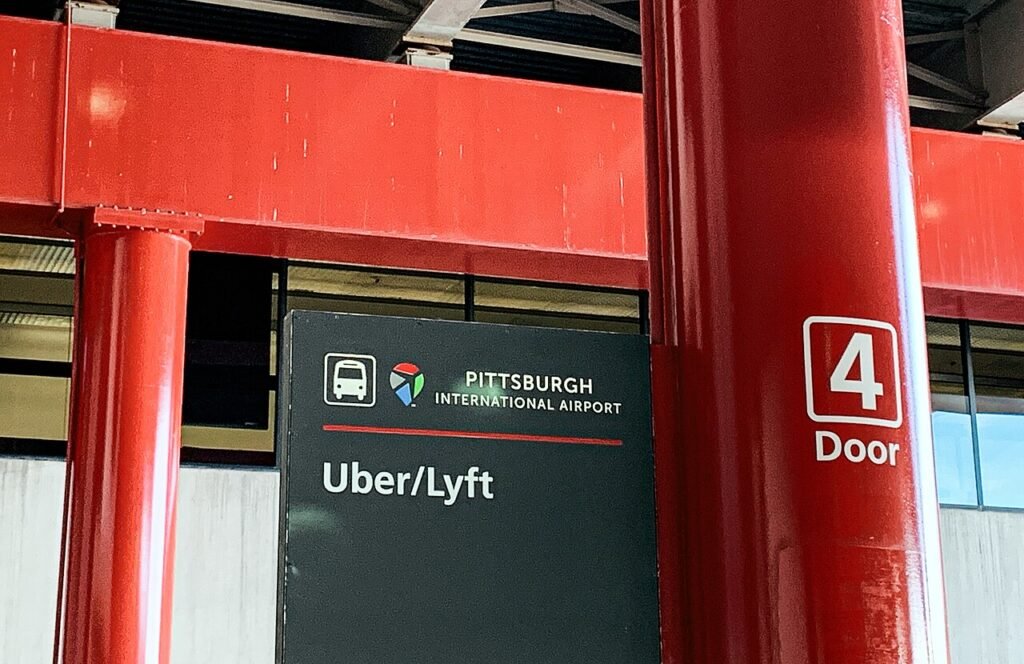
Photo: Tony Webster, Wikimedia Commons, CC BY 2.0
Here’s a fun fact nobody asked for: you can hand your driver’s license to one company and have it stolen from a completely different company you’ve never heard of. No pickpocket required. No wallet involved. Just a cloud account, a stolen password and a very bad week for nearly 150,000 rideshare drivers.
Uber is notifying 149,346 people that hackers stole their personal and driver’s license information, according to TechCrunch and SecurityWeek, which cited breach notices Uber filed with state attorneys general. The twist? Uber itself wasn’t the company that got broken into. The hackers got in through an AI company Uber worked with. If you drive for Uber, or ever signed up to, here’s what happened in the Uber data breach, why it matters, and the free steps that protect you in about 15 minutes.
What happened, in plain English
According to the notice Uber’s lawyers sent to the Iowa attorney general, a service provider told Uber on Oct. 9 that an outsider had stolen the provider’s own internal login credentials. Uber says it immediately cut its data connections to the provider and started investigating, and by Oct. 13 it had found that the stolen credentials were used on Oct. 7 to get into Uber’s account with that provider and reach Uber data stored there.
What got taken: images of driver’s licenses, plus text pulled from them, including names, home addresses, dates of birth and driver’s license numbers. Uber started mailing letters to affected people on Nov. 10. Iowa alone has about 2,999 affected residents, and the letter template lists about 1,873 in Rhode Island. According to TechCrunch, notices have also gone out or been filed in states including California, Illinois, Massachusetts, South Carolina, Texas and Vermont.
Here’s the part that should make every company with a “we take security seriously” banner a little sweaty. Uber says the data sat in a cloud storage area it built specifically for this vendor, watched by its own cloud security team, with alerts turned on. No alarm went off. Why? The crooks used real, valid credentials, so to the security system they looked like they belonged there. It’s like a burglar with a copy of your house key. The alarm doesn’t know the difference.
Uber’s letters didn’t name the provider, but an Uber spokesperson confirmed to TechCrunch that it was Fireworks AI, a company that lets businesses run and fine-tune open-source AI models. This is also Uber’s second known breach this year, after a security incident at its Uber Freight trucking unit.
Wait, why does an AI company have my license?
Good question, and one Uber hasn’t fully answered. Its notice only says the data lived in an environment built “specifically to enable the service provider’s work.” Companies increasingly send documents to AI services to read, sort and pull information out of them. Think of it as hiring a very fast temp to read paperwork. The problem is that every temp you hire is one more desk your paperwork sits on.
Fireworks says it has hired Palo Alto Networks’ Unit 42 team to investigate. In its Nov. 9 security update, the company said account and billing information was affected, and for a limited set of customers, secrets, datasets and partly trained AI models were accessed too. It blamed a financially motivated criminal group that steals access to AI models and resells it, a scheme security researchers call “LLMJacking.” A second break-in on Oct. 24 came through a separate cloud provider that hosted Fireworks’ research machines, The Record reported.

Uber isn’t the only big name caught up in this. Notion, the popular note-taking app, says the incident touched less than 1% of its workspaces and included Notion AI chat transcripts used for a feature called Insights. Its advisory tells affected customers to treat that data as exposed and to change any passwords or keys they pasted into Notion AI. AI coding company Cursor has also confirmed it lost data in the Fireworks hack.
That’s a lesson for anyone who chats with AI tools: whatever you type into a chatbot can travel to companies you’ve never heard of. If you’d like to keep sensitive questions on your own computer, running an AI model locally is one option.
Why it matters to you
A stolen password is annoying. A stolen driver’s license is worse, because you can’t just click “reset.” Your name, address and birthday don’t change, and getting a new license number usually means a trip to the DMV and a lot of patience. Put those details together with a picture of the actual license and a crook has a decent starter kit for opening accounts, renting things or pretending to be you.
There’s a second risk that hits sooner: scams. Breach news is catnip for crooks. Expect fake emails and texts pretending to be Uber, “Uber support” or a credit monitoring company, asking you to “verify” your account or pay a fee to “protect” your identity. Uber’s real letter is a paper notice with a return address of Uber Technologies, c/o Cyberscout, in Suwanee, Georgia, and the monitoring it offers is free.
And even if you’ve never driven for Uber, this story is a peek at how data really moves. You give your info to one company, it shares it with a vendor, that vendor runs on another company’s servers, and the weakest link in that chain decides how safe you are. You can’t control the chain, but you can make your stolen info a lot less useful to thieves.
Your 15-minute protection plan
- Check your mail (the paper kind). If you’re affected, Uber’s letter includes an activation code for free credit monitoring and fraud help from Cyberscout, a TransUnion company, through mytrueidentity.com. You have to enroll within 90 days of the letter’s date, so don’t let it sit under the pizza coupons.
- Freeze your credit at all three bureaus. It’s free, it takes a few minutes per bureau online, and it blocks anyone, including you, from opening new credit in your name until you lift it. Experian, TransUnion and Equifax each have a freeze page, and you can thaw it temporarily when you apply for a loan.
- Tell your DMV. The Federal Trade Commission’s IdentityTheft.gov says that if your license info is stolen, you should contact your state motor vehicle office. It may flag your number or suggest a duplicate license. Find yours at USA.gov.
- Pull your free credit reports. Go to AnnualCreditReport.com, the official free site, and look for accounts or addresses you don’t recognize. You can check every week at no cost.
- Treat every “Uber security” message as guilty until proven innocent. Don’t click links in texts or emails about the breach. Open the Uber app yourself or type the address in your browser.
- If you used Notion AI or another AI tool for work, change any passwords or keys you ever pasted into a chat. Going forward, don’t feed chatbots anything you wouldn’t want on a billboard.
If you spot an account you didn’t open, report it at IdentityTheft.gov, which builds a recovery plan for you. We walked through a similar cleanup after the Expedia breach claims earlier this month, and the same habits apply here.
What I’d grab
Nothing on this list beats a free credit freeze, so do that first. These two just make the follow-through easier.
- Norton 360 with LifeLock Select (5 devices, 1 year): if you weren’t on Uber’s list but your info has shown up in other breaches, this bundles antivirus with identity-theft monitoring and alerts. Freeze your credit first, though, because that part is free.
- Amazon Basics 6-Sheet Micro-Cut Shredder: breach letters, old pay stubs and pre-approved credit offers carry exactly the kind of details thieves love. A micro-cut shredder turns them into confetti instead of a starter kit for identity theft.
As an Amazon Associate I earn from qualifying purchases.
The bottom line
Nearly 150,000 Uber drivers just learned that their license can get lifted from a company they never dealt with, without anyone touching their wallet. You can’t stop vendors from getting hacked, but a credit freeze, a quick DMV call and a healthy suspicion of breach-themed messages make your stolen details close to worthless. Got a weird letter or text you’re not sure about? Send it our way through the Contact Us page.
Like your tech news without the jargon? Come hang out on my YouTube channel for more how-tos and real-world gear tests.
Sources
- TechCrunch: Uber says hackers stole information on close to 150,000 driver’s licenses during data breach (updated Nov. 16, 2026)
- SecurityWeek: Uber Data Breach Impacts 150,000 People (Nov. 16, 2026)
- Uber breach notice to the Iowa Attorney General, with consumer letter (Nov. 10, 2026)
- Fireworks AI: Update on October 2026 security incident (Nov. 9, 2026)
- The Record: AI company Fireworks says hackers stole data, billing info during October breaches (Nov. 10, 2026)
- Notion: Fireworks AI incident advisory (updated Nov. 13, 2026)
- FTC IdentityTheft.gov: What to do if your information was part of a data breach




More Stories
A Text From “Your Bank” Cost One Man $39,000. Then “the FBI” Asked for $35,000 More. Here’s How to Spot the Scam
Your Printer Isn’t Broken. Windows’ November Update Is Tripping Over Invisible Pictures. Here’s the Fix
AI Chatbots Are Sending Holiday Shoppers to Fake Stores. Here’s the 60-Second Check Before You Pay