These are the tools and parts that matter most for a small DIY solar install like ours. Our home runs on an EG4 off-grid system with an EG4 3000 EHV inverter that we have lived with for about two years, and every item below is something we use, wrote about, or that shows up in the photos from our own install. This page is not a substitute for a licensed electrician or your local code.
Some links are affiliate links: as an Amazon Associate I earn from qualifying purchases, and Santan Solar links are affiliate links too, at no extra cost to you. See our Affiliate Disclosure.
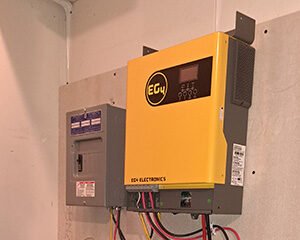
The core system
EG4 3000 Watt Off Grid Inverter (3000 EHV). An all-in-one inverter, charger and charge controller in one box. It is what we started with and still use. Read our EG4 3000 EHV review for what we like and do not like, and why it can trip the 120 volt input breaker if yours does.
EG4-LL 48V 100Ah battery. A server-rack style lithium battery with a screen, extra terminals and a 10-year warranty. More batteries can be added later as your needs grow. If you are sizing a bank, our solar install math cheat sheet walks through the numbers.
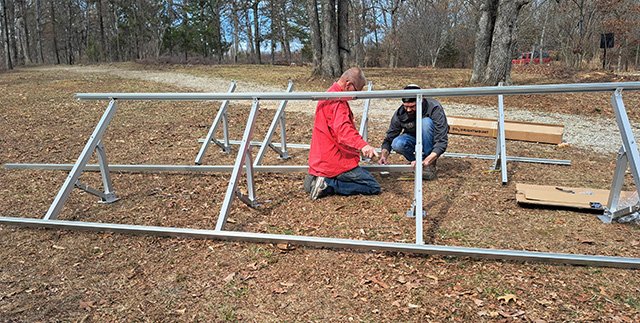
EG4 Brightmount rack. The ground-mount rack kit we used for our array. Note that larger panels may only fit three per rack, so check panel dimensions before you order.
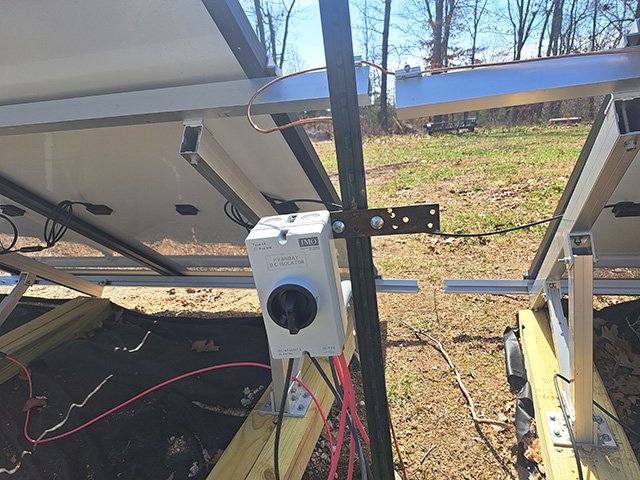
IMO DC disconnect. A switch at the array that cuts DC power from the panels. Being able to shut the array off quickly is one of the cheapest safety upgrades you can make, and it is one of the first things we would tell a new DIYer to include.
Tools for safe checks
Fluke 117 true-RMS multimeter. Use it to confirm panel string voltage before connecting it to the inverter, check battery voltage, and verify that a circuit is dead before you touch it. Our solar fire safety checklist explains what to look for.
Klein NCVT-3P non-contact voltage tester. A quick pocket check for live AC wires without touching conductors. It is not a replacement for a meter, but it is a fast first check before opening a box.
IWISS MC4 solar connector kit. Most panels connect with MC4 plugs. A proper crimper and dies make solid, weatherproof connections when you need to make custom-length cables, instead of trusting a pair of pliers.
Learn from our install
- The start of our solar journey
- Our DIY solar power system install, start to finish
- EG4 3000 EHV review
- EG4 3000 EHV breaker trip troubleshooting
- A 15-minute security check for EG4 inverters
- Who the EG4 60 kWh home battery makes sense for
- Off-grid inverter pros and cons
- Hybrid inverter pros and cons
- Grid-tie inverter pros and cons
Video walkthroughs live on my YouTube channel. Questions about your own setup? Use the Contact page.