
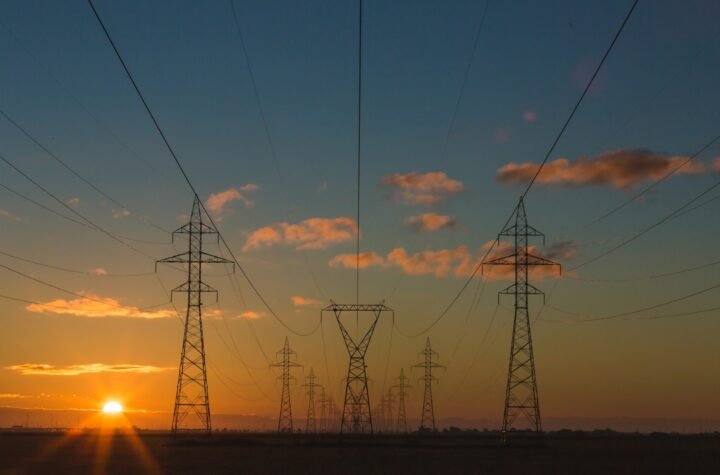
Grid-tie systems dance with the utility. When the grid naps, most of them nap too. Photo: Unsplash.
A grid-tie (grid-tied) solar inverter’s job is delightfully narrow: turn panel DC into utility-synchronized AC and shove it into your electrical system so your meter spins slower—or backwards, where net metering still behaves. It is the “lower my bill” specialist.
It is not, by default, your blackout buddy. When the grid fails, most standard grid-tie inverters shut down on purpose so they don’t electrocute a lineworker. That safety feature surprises people who assumed “solar panels on the roof” meant “house stays lit.” Spoiler: without batteries and the right hybrid/backup gear, it doesn’t.

Who a grid-tie inverter fits
- Homes with reliable utility power whose main goal is bill offset and carbon bragging rights.
- Simple rooftop projects with strong net metering or community solar-adjacent incentives.
- Renters of the “I might move in 5 years” mindset sometimes still buy—but ROI math must clear the move date.
- Not ideal if outages are your top pain. For storms and shutoffs, look at hybrid or off-grid instead.
Benefits
- Lowest complexity among the three: panels → inverter → main panel (plus disconnects/RSD as required).
- No battery CapEx on day one—great if storage prices or space aren’t ready.
- High efficiency at turning sun into bill reduction when the grid is present.
- Mature permitting path in many utilities for standard PV interconnects.
Pros and cons
Pros
- Cheapest way to start cutting kWh purchases from the utility.
- Fewer components to maintain than battery systems.
- String or microinverter ecosystems are well understood by installers.
- Easy story: “solar lowers the bill.”
Cons
- No backup by default during outages (anti-islanding).
- Value depends heavily on rate design—bad net metering can kneecap ROI.
- Export limits or “non-export” rules may force curtailment.
- Adding batteries later may mean a hybrid retrofit, AC-coupled storage, or inverter replacement.

Batteries over 15,000 Wh? Usually not this architecture
A standard grid-tie inverter has nowhere useful to park a 15.36 / 20 / 30 kWh battery bank. Watt-hours still equal volts × amp-hours, but without a battery charger/inverter stage (hybrid, AC-coupled battery inverter, or a battery-ready hybrid gateway), those modules are expensive furniture.
- 15.36 kWh example: still 3 × 5.12 kWh (51.2V 100Ah) modules—or ~320 Ah at 48V shorthand—but only meaningful if you add hybrid/AC-coupled storage.
- 20–30 kWh: same math as the other guides; pair with backup-capable equipment if outages matter.
- Battery-ready marketing: some “grid-tie” pitches are really hybrids with empty battery ports. Read the datasheet. If it can’t charge/discharge a battery, it isn’t storage.

120V vs “220V” (really 240V) in plain English
People say “220” the way they say “Kleenex.” In U.S. homes, the utility usually delivers split-phase 120/240V. Two “hot” legs each measure about 120V to neutral. Measure hot-to-hot and you get about 240V (sometimes 230–250V at the meter—still called 240V in modern labeling). Older slang still says 220. Same family of service.
Most lights, outlets, TVs, fridges, and computers are 120V. The stuff that gulps power—electric dryers, ranges/ovens, many central air handlers, well pumps, EV chargers, some shop welders—wants 240V (two hots).
Grid-tie inverters for U.S. homes are typically designed for 240V split-phase interconnection at the main service. Microinverters often output 240V per unit on the PV branch circuit. You still have 120V loads in the house—the panel’s neutral does that split. Appliance rules don’t change: dryers and ranges want 240V breakers; lamps want 120V. The inverter must match the service the utility and inspector expect.
Whatever the inverter, a licensed electrician should handle your main panel, service entrance, transfer equipment, and any high-voltage AC interconnect. Local codes, utility rules, and “please don’t burn the house down” all vote the same way. This guide is a buyer’s map, not a wiring recipe.

Tools you will actually need
You do not need a van full of electrician cosplay. You do need a few tools that tell the truth, plus the humility to hand panel and service work to a licensed electrician. Some links are affiliate links, and I may earn a commission at no extra cost to you. As an Amazon Associate I earn from qualifying purchases. Full affiliate disclosure. Shopping list (check current availability):
- Digital multimeter: Fluke 117 true-RMS multimeter for verifying AC/DC voltage before you trust a wire.
- Non-contact voltage tester: Klein Tools NCVT-3P so you can check for live AC without poking conductors first.
- Insulated screwdrivers: Klein Tools 85076INS 1000V 6-piece set for work near energized gear (still: de-energize whenever you can).
- Wire stripper/cutter: Klein Tools 11063W automatic stripper for clean copper prep on ordinary AC/control wire.
- Torque wrench: TEKTON 24330 3/8-inch click torque wrench (10–80 ft-lb) so battery and lug bolts match the manufacturer’s torque—not “good and tight.”
- MC4 solar connector kit: IWISS MC4 crimp/strip/connector tool kit for PV cable terminations that actually seal.
- Manufacturer manuals, a notepad, and a camera—future-you will thank present-you for labeling every breaker and cable.

Even “simple” grid-tie jobs involve live service equipment, rapid-shutdown devices, and utility paperwork. Your tool bag helps with PV terminations and verification—not with inventing a new service mast over the weekend.
Practical buyer checklist
- Pull 12 months of kWh usage; size the array for goals, not vibes.
- Read your utility’s interconnection + net metering rules before buying hardware.
- Decide: pure bill offset now, or battery-ready hybrid if outages keep you up at night.
- Confirm roof structure, shading, and rapid-shutdown / labeling requirements.
- Get written scope from a licensed electrician / qualified solar installer for AC interconnection.
- If storage is “someday,” prefer equipment that won’t force a rip-and-replace.
- For EG4/hybrid alternatives when backup matters, start at Signature Solar (affiliate) and our solar hub.
FAQs
Why did my solar shut off in the blackout?
Standard grid-tie inverters must stop exporting when the grid is down. It’s a safety rule, not a personal betrayal. Batteries + hybrid/backup gear are how you keep lights on.
Are microinverters grid-tie?
Usually yes—they’re a distributed grid-tie architecture. Backup still needs storage and a gateway designed for islanding.
Can I add a 20 kWh battery later to a cheap string inverter?
Sometimes via AC-coupled battery systems, sometimes only by replacing with hybrid. Ask before the roof anchors go in.
Related reading on Pages of Wisdom
If outages matter, read the hybrid inverter guide. If the grid is optional, read the off-grid inverter guide. More home context: our solar journey and DIY install notes.
Prefer the short version of solar and tech gotchas? Catch the channel on YouTube.
Pages of Wisdom — plain-English solar for real life.


More Stories
Solar Install Math Cheat Sheet: Series vs Parallel, the 1.25 Factor, Bifacial Gain, and Fridge Runtime
Off-Grid Solar Inverter Pros and Cons: Who It’s For, Batteries Over 15 kWh, and 120V vs 240V
Hybrid Solar Inverter Pros and Cons: Backup Power Without Quitting the Grid