
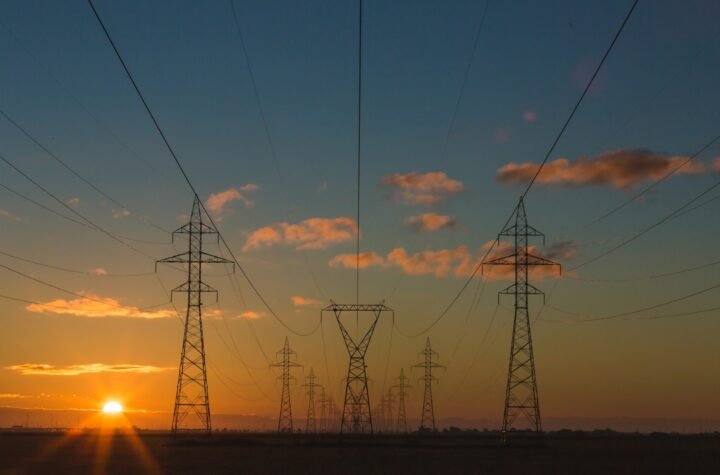
Off-grid inverters shine where utility power is weak, pricey, or missing. Photo: Unsplash.
An off-grid solar inverter is the appliance that turns panel and battery DC into house AC without needing the utility to be awake. If the grid is a no-show—rural co-op, mountain cabin, or a neighborhood that browns out every thunderstorm—this is the personality type you want.
It is also the personality type that makes you own your power like a grown-up: batteries, careful load planning, and zero daydreams about “selling juice back to the power company.” For that dance partner, see the hybrid and grid-tie guides linked below.

Who an off-grid inverter fits
- Homes or shops with weak, expensive, or missing grid service.
- Critical-load setups (fridge, freezer, lights, well pump controller, internet) that must survive multi-day outages.
- DIY expanders who like all-in-one units (inverter + charger + MPPT) and plan to grow the array later—exactly the path we documented in our DIY solar install and solar journey.
- Not ideal if your #1 goal is maximizing utility net metering with the simplest permit path—that’s usually grid-tie territory.
Benefits (the good stuff)
- True independence: when the street goes dark, your inverter keeps humming from batteries and sun.
- All-in-one simplicity: many off-grid units combine PV charge control, battery charging, and AC output so you’re not wiring five mystery boxes.
- Generator-friendly: most accept AC input from a generator or utility to recharge batteries when weather sulks.
- Scalable: parallel more units or add batteries as your budget thaws—see our EG4 off-grid inverter picks.
Pros and cons
Pros
- Works during grid outages by design—not as a special “backup mode” you have to unlock.
- Great for cabins, barns, shops, and partial-home critical panels.
- You control charge priority (solar first, then generator/utility assist).
- Often cheaper per watt of backup capability than some hybrid whole-home packages.
Cons
- Usually cannot export solar to the grid for bill credits (and that’s often a legal/hardware feature, not a bug).
- You must size batteries honestly—sunny Saturday math fails on gray Tuesday.
- Sensitive electronics may notice voltage dips when big motors start (we’ve lived that story with the EG4 3000 EHV).
- Permitting, grounding, and transfer equipment still matter even in “DIY friendly” counties.

Suggested battery banks over 15,000 Wh
For modern 48V LiFePO₄ racks (common with EG4-style all-in-ones), energy is simply:
Watt-hours = battery voltage × amp-hours. Example at a 51.2V nominal 100 Ah server-rack module: 51.2 × 100 ≈ 5,120 Wh (5.12 kWh) per battery.
- ~15.36 kWh: three 5.12 kWh modules (3 × 100 Ah @ 51.2V). Roughly 320 Ah of 48V-class capacity if you think in “48V × Ah” shorthand (15,360 ÷ 48 = 320 Ah). Good starter “fridge + lights + internet through a cloudy evening” bank for many homes.
- ~20.48 kWh: four modules (4 × 5.12). About 427 Ah at the 48V shorthand. Comfortable for longer outages or heavier evening loads.
- ~30.72 kWh: six modules (6 × 5.12). About 640 Ah at the 48V shorthand. Whole-home vibes for a day or more, depending on HVAC appetite.
Usable energy is less than the sticker if you leave reserve headroom (many owners stay above ~10–20% state of charge). Cold garages, big inverters idling, and “just one more Instant Pot” also nibble the bank. Size for your worst week, not your best Instagram day.

120V vs “220V” (really 240V) in plain English
People say “220” the way they say “Kleenex.” In U.S. homes, the utility usually delivers split-phase 120/240V. Two “hot” legs each measure about 120V to neutral. Measure hot-to-hot and you get about 240V (sometimes 230–250V at the meter—still called 240V in modern labeling). Older slang still says 220. Same family of service.
Most lights, outlets, TVs, fridges, and computers are 120V. The stuff that gulps power—electric dryers, ranges/ovens, many central air handlers, well pumps, EV chargers, some shop welders—wants 240V (two hots).
A single 120V off-grid inverter is perfect for outlet-heavy critical loads. Want a dryer or central AC on solar? You need a 120/240V split-phase inverter (or two paralleled 120V units configured for split-phase). Match the inverter’s output to the appliances you refuse to live without—not the ones you only use on Thanksgiving.
Whatever the inverter, a licensed electrician should handle your main panel, service entrance, transfer equipment, and any high-voltage AC interconnect. Local codes, utility rules, and “please don’t burn the house down” all vote the same way. This guide is a buyer’s map, not a wiring recipe.

Tools you will actually need
You do not need a van full of electrician cosplay. You do need a few tools that tell the truth, plus the humility to hand panel and service work to a licensed electrician. Some links are affiliate links, and I may earn a commission at no extra cost to you. As an Amazon Associate I earn from qualifying purchases. Full affiliate disclosure. Shopping list (check current availability):
- Digital multimeter: Fluke 117 true-RMS multimeter for verifying AC/DC voltage before you trust a wire.
- Non-contact voltage tester: Klein Tools NCVT-3P so you can check for live AC without poking conductors first.
- Insulated screwdrivers: Klein Tools 85076INS 1000V 6-piece set for work near energized gear (still: de-energize whenever you can).
- Wire stripper/cutter: Klein Tools 11063W automatic stripper for clean copper prep on ordinary AC/control wire.
- Torque wrench: TEKTON 24330 3/8-inch click torque wrench (10–80 ft-lb) so battery and lug bolts match the manufacturer’s torque—not “good and tight.”
- MC4 solar connector kit: IWISS MC4 crimp/strip/connector tool kit for PV cable terminations that actually seal.
- Manufacturer manuals, a notepad, and a camera—future-you will thank present-you for labeling every breaker and cable.

Practical buyer checklist
- List every 120V and 240V load you care about in an outage (watts + startup surge).
- Pick inverter continuous and surge ratings above that list with headroom.
- Choose battery chemistry you understand (LiFePO₄ with a real BMS is the modern default).
- Plan PV array watts for both “good day” charging and “bad week” recovery.
- Decide critical-load subpanel vs whole-home—and budget the electrician for the panel side.
- Confirm generator or utility AC-input charging if storms outlast your battery.
- Compare current EG4-class gear at Signature Solar (affiliate) against your local code reality.
FAQs
Can an off-grid inverter power my whole house?
Maybe. Whole-home means matching both energy (kWh in the batteries) and power (kW the inverter can surge). Many families start with a critical-load panel and graduate later.
Do I still need an electrician?
Yes for service, main panel, transfer gear, and anything that can backfeed or touch utility conductors. DIY enthusiasm does not repeal physics or the inspection sticker.
Is 15 kWh enough?
For lights, fridge, freezers, routers, and modest evening loads—often yes for a night or two. Heat pumps and electric ranges laugh at small banks.
Related reading on Pages of Wisdom
Next: compare a hybrid solar inverter if you want grid bills and blackout backup, or a grid-tie inverter if simplicity and bill offset are the whole mission. Browse the solar equipment hub and our best off-grid inverter notes.
Prefer the short version of solar and tech gotchas? Catch the channel on YouTube.
Pages of Wisdom — plain-English solar for real life.


More Stories
Solar Install Math Cheat Sheet: Series vs Parallel, the 1.25 Factor, Bifacial Gain, and Fridge Runtime
Grid-Tie Solar Inverter Pros and Cons: When Simple Solar Wins (and When It Doesn’t)
Hybrid Solar Inverter Pros and Cons: Backup Power Without Quitting the Grid