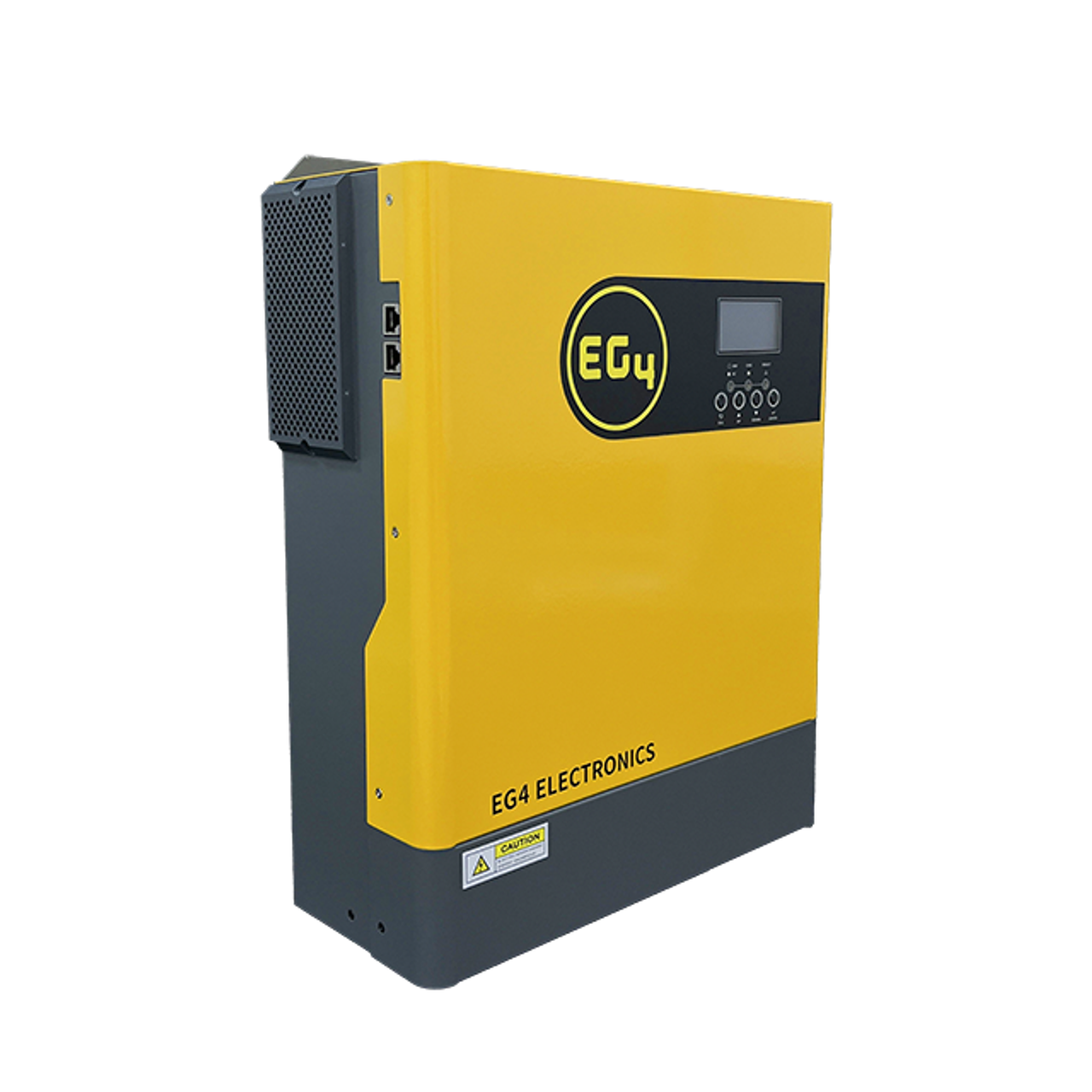
Video above may have a bad thumbnail but certainly cuts to the point. The EG4 3000 watt inverter does work but has several downsides.
#1 When any appliance turns on; the lights will dim/flicker a touch. This is not good for sensitive electronics.
#2 Wifi software is still not worth using as of 8/2024.
#3 Is currently tripping the 20amp breaker that runs to the INPUT on the EG4 3000-EHV. It is not doing it but once a month or so but my guess is that is it hitting the 3000 watt area on supply and asks for too much from my grid breaker. Certainly should not trip a 20 amp breaker when needing just a little extra considering I have 3 EG4-LL V2 Batteries connected to it.
However it does function as described to the most part.
To buy one or take a peek go to Santan Solar
For a fuller DIY solar shopping list (meters, MC4 tools, and EG4 links), see our DIY Solar Toolkit.
Our setup, so you can compare
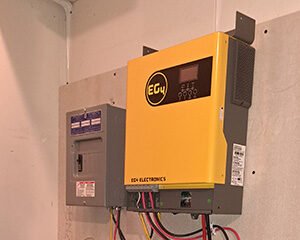
A review is only useful if you know what it was tested on. Here is what our EG4 3000 EHV is running with:
- Ten Silfab 380 watt panels wired in series, about 3,800 watts total. The 3000 EHV can take up to 5,000 watts of solar input, so there is room to grow.
- About a 90 foot run of 10 AWG PV wire from the array to the inverter, with an IMO DC disconnect at the panels, an inline 30 amp fuse and a breaker before the inverter.
- Three EG4-LL V2 48 volt batteries.
- Grid power feeding the inverter’s input through a 20 amp breaker as a backup.
- It runs our refrigerator, freezer, lights, computers, TV and chargers.
What I like
- All in one box. Charge controller, inverter and charger in one unit, with no exposed shock points. For a first system, that simplicity is worth a lot.
- Easy to expand. A second unit can be paralleled for 6,000 watts and 240 volts, and more batteries can be added over time.
- It does the job. For the most part, it functions as described and keeps our critical loads running.
What I do not like
- Light flicker. When an appliance kicks on, the lights dim or flicker a touch. That is not great for sensitive electronics. A small battery backup (UPS) for computers and networking gear is cheap insurance.
- The Wi-Fi monitoring software. As of August 2024 it was still not worth using. If you do use the Wi-Fi dongle, read my EG4 inverter security checklist first, because CISA flagged security holes in EG4’s dongles.
- Input breaker trips. About once a month, it trips the 20 amp breaker feeding its input. I break down the likely causes in why the EG4 3000 EHV trips the 120 volt input breaker.
Who the EG4 3000 EHV is for
It is a good fit for a first off-grid or backup system for critical loads, a cabin, shop or barn, or anyone who wants to learn solar on a budget and add on later. It is probably not the right choice if you need to run a whole house with central air, a well pump and an electric range at the same time. For that, look at larger split-phase units like the ones on our best off-grid solar inverters page, or read our hybrid inverter guide if you want to stay tied to the grid.
Tips if you buy one
- Size your input breaker and wire for the worst case, not the average day.
- Put computers, routers and other sensitive electronics on a small UPS to smooth out flicker.
- Use the inverter settings to make solar and battery your first source and the grid your backup.
- Keep the firmware and dongle up to date, and keep the dongle off your main home network if you can.
- Label every disconnect so anyone in the house can shut the system down.
Quick answers to common questions
Can it run a refrigerator and freezer?
Yes. Ours runs a refrigerator and a freezer, along with lights, computers, a TV and chargers, with room to spare. Expect the lights to flicker a little when the compressors kick on.
Can it sell power back to the grid?
No. The 3000 EHV is an off-grid inverter. It can use grid power as a backup input, but it does not feed power back into the utility lines. In a rural area like ours with very few building codes, not backfeeding the grid was the main rule we had to follow, and this setup cannot do it.
Is it really a DIY install?
For us it was. The panels plug together with MC4 connectors that cannot be hooked up backwards, and the inverter keeps the wiring simple. Still, grounding, breakers and any connection to your home’s main panel deserve extra care, and a local electrician can check your work for little or no cost.
Where can I buy one?
To buy one or take a peek, go to Santan Solar (affiliate link). Compare prices and check stock before you buy, because availability on EG4 models changes often.
If you are comparing the 3000 EHV with other inverters, our page on The Best Off Grid Solar Inverters and our guide to off-grid inverter pros and cons lay out the trade-offs side by side.
Related reading on Pages of Wisdom
- EG4 3000 EHV solar inverter. it is tripping the breaker on the 120 volt input at times.
- Our DIY Solar Power System Install Start to Finish in 2024
- The Start of the Journey into Solar for Our Home
- Own an EG4 Solar Inverter? Here’s the 15-Minute Security Check Worth Doing Tonight
- EG4 Just Launched a 60 kWh Home Battery in One Box. Here’s Who It Actually Makes Sense For
- Off-Grid Solar Inverter Pros and Cons: Who It’s For, Batteries Over 15 kWh, and 120V vs 240V
Key takeaways from this EG4 3000 EHV review
In this short EG4 3000 EHV review, the 3000 watt inverter mostly works as described, but light flicker on appliance start, weak Wi‑Fi software (as of 8/2024), and occasional 20A input-breaker trips are real downsides in our setup with three EG4-LL V2 batteries.
More detail: why the EG4 3000 EHV may trip the 120V input breaker, our DIY solar power system install, and solar power equipment & DIY advice.


More Stories
Eyeing a Power Station Deal This Black Friday? Do This 5-Minute Math Before You Click Buy
Own an EG4 Solar Inverter? Here’s the 15-Minute Security Check Worth Doing Tonight
Renters Are Getting Paid to Plug In a Battery. Here’s How a ‘Power Plant’ Fits Behind Your Couch