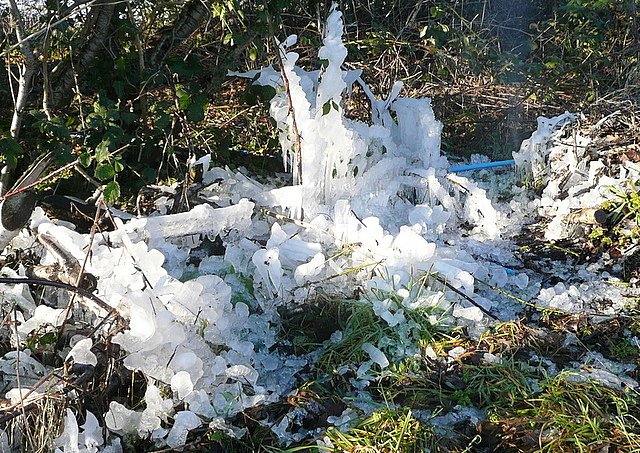
This is what a burst pipe looks like when the cold wins. Photo: Graham Horn, via Wikimedia Commons (geograph.org.uk). CC BY-SA 2.0.
Enjoy the nice weather while it lasts, because the forecast just turned on us. A deep dip in the jet stream is headed for the eastern half of the country later this week, and according to weather.com, daytime highs will drop about 20 degrees from Wednesday to Friday all the way from Chicago to Atlanta. By the weekend, overnight lows are expected in the 30s as far south as the Florida Panhandle.
On top of that, a possible nor’easter could bring soaking rain, gusty wind, and the first snowflakes of the season to parts of the Great Lakes, the Appalachians, upstate New York, and northern New England between Thursday, November 12, and Saturday, November 14, USA TODAY reports. Weather.com says the cold air will bring the first frost and freezes of the season for millions of people.
The big storm is getting the headlines. The quieter story is what that first freeze can do to the water pipes in your house, and how cheap it is to stop it. This is the perfect week for a 30-minute walk-around, so here’s the plain-English plan.
Why a little ice can cost a lot of money
Water is weird. Almost everything shrinks when it gets cold, but water expands when it turns to ice. The American Red Cross explains that this expansion puts tremendous pressure on whatever is holding the water, and no matter how strong a pipe is, freezing water can break it. Think of a soda can left in the freezer, except the can is behind your drywall.
Here’s the sneaky part: the damage usually shows up after the cold. The ice acts like a plug while it’s frozen. When it thaws, water pours out of the crack. State Farm says a small crack in a pipe can release more than 250 gallons of water a day, which is enough to ruin floors, drywall, and everything stored in the basement.
And it’s not a small bill. State Farm’s latest numbers, reported by Carrier Management, show more than 20,000 frozen pipe and winter water damage claims from January 2024 through June 2025, totaling over $628 million in paid losses. The average claim payment was more than $30,000. The five states with the highest totals were Illinois, Oregon, Washington, Texas, and Tennessee, so this isn’t just a problem for people who live near Canada.
Frost, freeze, or hard freeze? What the alerts mean
You may see a few different cold-weather alerts on your phone this week. Here’s what the National Weather Service means by each one:
- Frost Advisory: frost is expected. It’s mostly a warning for tender plants, so think about covering the flower bed.
- Freeze Watch: widespread freezing temperatures are possible in the next 24 to 36 hours. Time to get ready.
- Freeze Warning: temperatures are forecast to drop below 32°F for a long stretch. The weather service says temperatures below 28°F for an extended time can kill most plants.
Now for the honest part. A single night just under 32°F usually won’t burst the pipes inside a heated home. State Farm says pipes in uninsulated spots like attics, crawl spaces, and exterior walls are most at risk when it drops below 20°F. What does freeze easily in the first cold snap is anything exposed to the outside: garden hoses, outdoor faucets (plumbers call them hose bibs), and sprinkler lines. So this week isn’t a reason to panic. It’s a free practice run before the real cold shows up in December and January.
Your 30-minute first-freeze checklist
You don’t need tools or a plumber for most of this. Grab a flashlight and work through the list.
- Unhook every garden hose. A hose left attached traps water in the faucet, and that’s exactly where it freezes. Drain the hose and store it in the garage or shed. The Red Cross recommends removing, draining, and storing outdoor hoses before cold weather.
- Shut off and drain outdoor faucets. Many homes have a small shutoff valve inside, usually in the basement or a utility room, that feeds each outdoor faucet. Close it, then go outside and open the faucet so the leftover water can drain. The Red Cross says to leave that outside faucet open so any water still in the pipe has room to expand.
- Cover outdoor faucets. An insulated faucet cover is like a winter hat for your spigot. It’s cheap and takes about ten seconds to put on.
- Drain sprinkler and pool lines. Follow the manufacturer’s or installer’s directions. The Red Cross warns not to pour antifreeze into these lines unless you’re told to, because it’s harmful to people, pets, and plants.
- Hunt for cold pipes inside. Check the garage, basement, crawl space, attic, and under kitchen and bathroom sinks, especially sinks on outside walls. Any water line you can see in an unheated spot is a candidate for foam pipe sleeves, which the Red Cross recommends for both hot and cold lines.
- Seal the drafts. Cold air sneaking in around pipes, dryer vents, and cables can freeze a line even in a warm house. State Farm suggests sealing leaks that let cold air in.
- Find your main water shutoff. This is the most important item on the list. If a pipe ever bursts, shutting off the main valve is how you turn a disaster into a mess. State Farm says to know where your shutoff valve is before an emergency. Show everyone in the house where it is, too.
On the coldest nights
When the forecast dips into the low 20s or below, a few extra habits help a lot. These come straight from the Red Cross and State Farm:
- Let a faucet drip. Pick a faucet on an outside wall and let the cold water trickle. Moving water is much harder to freeze, and a drip also relieves pressure if ice starts to form.
- Open the cabinet doors under kitchen and bathroom sinks so warm room air can reach the pipes. Move cleaners and chemicals out of reach of kids and pets first.
- Keep the garage door closed if any water lines run through the garage.
- Skip the big nighttime thermostat drop. The Red Cross suggests keeping the same temperature day and night during a cold snap. Your heating bill may be a little higher, but it’s a lot cheaper than a plumber.
- Leaving town? Keep the heat on and set no lower than 55°F, both the Red Cross and State Farm say.
Think a pipe froze? Here’s what to do
The classic sign is turning on a faucet and getting only a trickle, or nothing at all. The Red Cross and State Farm both recommend these steps:
- Keep the faucet open. As the ice melts, running water helps melt the rest.
- Warm the frozen section gently with a hair dryer, an electric heating pad, or towels soaked in hot water. State Farm suggests starting near the faucet and working toward the frozen spot.
- Never use an open flame. That means no blowtorch, propane or kerosene heater, or charcoal stove. It’s a serious fire risk.
- Don’t use electrical appliances near standing water, because of the risk of electric shock.
- Check the other faucets in the house. If one pipe froze, others may have too.
- If you can’t find the frozen spot, can’t reach it, or can’t thaw it, call a licensed plumber.
- If a pipe has burst, shut off the main water valve right away, leave the faucets open, and call your insurance company.
Why it matters to you
Most of the prep in this article costs nothing but a few minutes. The rest costs about as much as a pizza. Compare that to State Farm’s average frozen-pipe claim payment of more than $30,000, plus the weeks or months repairs can take, and this is one of the best deals in home ownership.
Renters, this applies to you too. Your landlord usually owns the pipes, but your couch, laptop, and clothes are the things sitting in the water. Unhooking a hose and letting a faucet drip on a bitter night are easy wins, and it’s worth asking your landlord where the main shutoff is before you need it.
The timing is also kind to us this year. USA TODAY reports the cold snap should be fairly short, with warmer-than-average temperatures forecast to return next week. That gives you a warm weekend afterward to finish anything you didn’t get to. If you’d like the bigger picture on getting your home ready for winter storms and outages, my no-drama home outage prep guide covers lights, heat, food, and water.
What I’d grab
You don’t need gadgets to protect your pipes, but these two are cheap insurance for the spots people forget:
- Frost King FC1 outdoor foam faucet cover (2-pack): a simple insulated cap that slips over an outdoor spigot after you drain it, so the faucet itself doesn’t freeze and crack.
- GoveeLife Smart Water Leak Detector 1s (3 sensors plus Wi-Fi hub): set the sensors under sinks, near the water heater, or in the basement, and your phone gets an alert when water shows up, which matters most when you’re away from home.
As an Amazon Associate I earn from qualifying purchases.
Have a frozen pipe story, or a trick your grandpa swore by? I’d love to hear it. Send it my way through the Contact Us page.
Short on time? My daily tech and prep shorts on YouTube give you the quick version.
Sources
- weather.com: A potential nor’easter could bring rain, snow by later this week (Nov. 9, 2026)
- USA TODAY: Nor’easter could bring first snow to millions as cold air invades U.S. (Nov. 9, 2026)
- National Weather Service: Understanding Cold Weather Alerts
- American Red Cross: Preventing and Thawing Frozen Pipes
- State Farm: Frozen Pipes? Not So Nice! (January 2026)
- Carrier Management: Frozen Pipes Lead to $628M in Losses for State Farm (Jan. 27, 2026)


More Stories
Stay Warm Without Getting Poisoned: Safe Heat During Winter Outages
Winter Storm Season Is Here: A No-Drama Home Outage Prep Guide