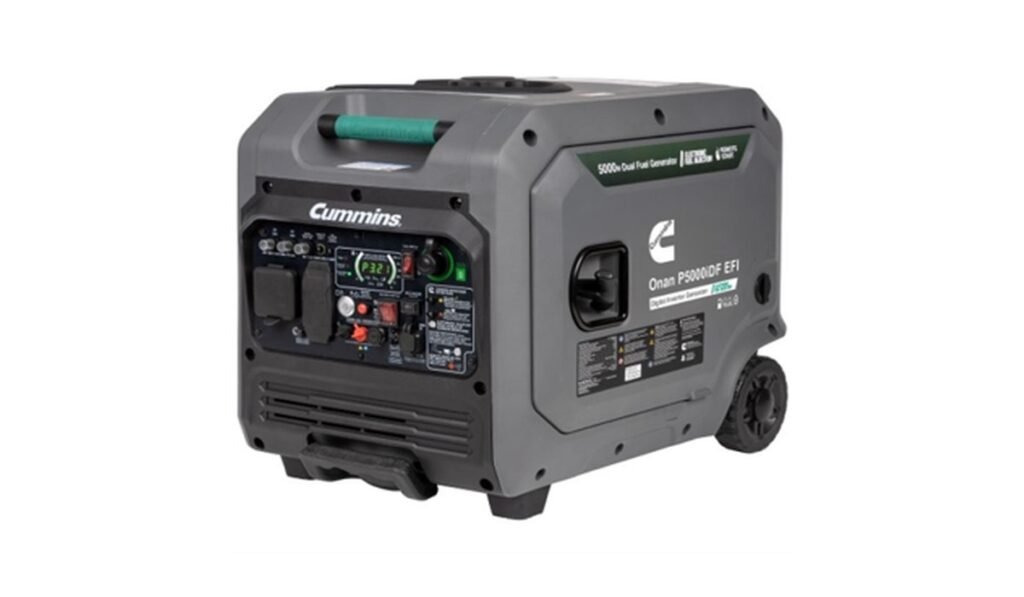
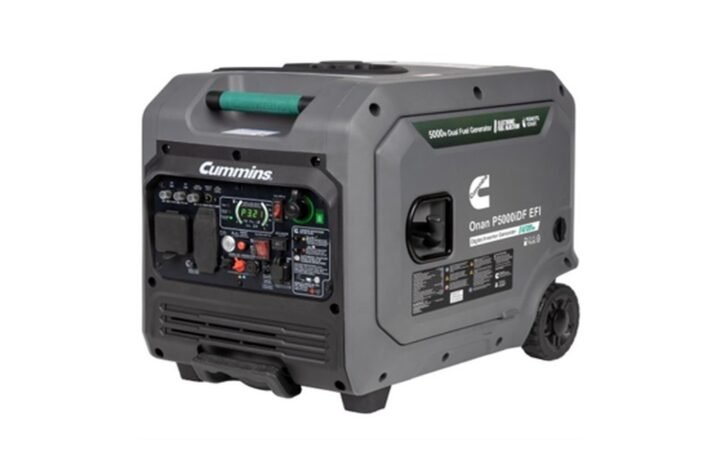
The recalled Cummins Onan P5000iDF EFI dual fuel generator. Image: U.S. Consumer Product Safety Commission recall notice.
A generator is supposed to be the calm hero of a winter blackout. It is not supposed to spit gasoline at you. But that’s exactly why Cummins just recalled one of its popular portable generators: the fuel tank can build up pressure until fuel sprays out or the gas cap pops off. One owner reported getting splashed in the face.
The timing is hard to ignore. This week’s nor’easter dumped heavy, wet snow on trees across parts of upstate New York and Pennsylvania, and the National Weather Service warned it was already knocking out power. So whether you own this exact model or any other generator, today is a good day to do a quick checkup before you actually need it.
What got recalled
According to the U.S. Consumer Product Safety Commission (CPSC) recall notice dated November 12, 2026, here are the details:
- The product: Cummins Onan P5000iDF EFI Dual Fuel Portable Generators. They’re dark gray, run on gasoline or propane, and make between 4,500 and 5,000 watts depending on the fuel.
- How to spot one: “Cummins” is printed in white on the front and on the handle, and “Onan P5000iDF EFI” is printed on the side next to the Cummins “C” logo.
- The exact unit: Cummins says only model P5000iDF EFI with part number A075C500 is included. Both numbers are on the label attached to the side of the generator.
- How many: about 2,960 units.
- Where they were sold: Camping World, Factory Pure, Northern Tool, AP Electric and online at Cummins.com, from May 2025 through August 2026, for between $1,640 and $1,930.
- Injuries: Cummins has received eleven reports of fuel discharging or the fuel cap ejecting, including the person splashed in the face. No one needed medical attention.
What’s actually going wrong
Your generator’s gas tank has to “breathe.” As gasoline warms up, it gives off vapor, and a small valve system lets that vapor escape in a controlled way. Cummins says the valves in this emissions system were installed incorrectly on the recalled units, so the vapor can’t vent properly and pressure builds up inside the tank while the generator runs.
Think of a soda bottle that’s been shaken and left in a hot car. Open it at the wrong moment and you’re wearing it. Now swap the soda for gasoline and park it next to a hot engine. That’s the fire and burn risk the CPSC is warning about.
If you own one, do this
- Stop using it now. Both the CPSC and Cummins say to stop using recalled units immediately.
- Check the label. Find the model and part number on the side label and compare them on the Cummins Safety Campaign #7308 page. Only part number A075C500 is part of this recall.
- Book the free repair. Cummins says an authorized Cummins distributor or service provider will inspect the vapor valves and fix them at no cost. Call the location first to confirm it can do this recall repair. You can also reach Cummins at 1-800-CUMMINS (1-800-286-6467).
- Move it carefully. Cummins says to let it cool to the touch first (typically 15 to 20 minutes), keep it upright, don’t tilt it more than 15 degrees, and make sure the fuel cap is tight. It weighs more than 50 pounds, so lift it with two people.
- Don’t touch it if something looks wrong. If the tank looks swollen or bulged, or you smell gas or see a leak, Cummins says not to move or handle it. Keep sparks and flames away and call Cummins for guidance.
The repair takes the generator out of service for a bit, so don’t wait until the next storm is on the radar. If you rely on it for a medical device or a well pump, line up a backup plan (a neighbor, a power station, or a warm place to go) until it’s back.
Don’t own a Cummins? Your 15-minute generator checkup
Most generator trouble shows up at the worst possible time: dark, cold, and with a fridge full of food on the clock. Here’s a quick checkup any owner can do this weekend, using advice from the CPSC, the American Red Cross and Be Ready Utah:
- Look up recalls on your model. Search your brand and model at CPSC.gov/Recalls. And if you never mailed in that registration card, register it online with the manufacturer so they can contact you next time.
- Check the fuel situation. Gas that has sat for months can go stale and gum up the engine. Be Ready Utah says if you store a gas generator for more than a few months, either run the tank dry or add fuel stabilizer. Stabilizer goes in fresh gas, not gas that’s already old.
- Inspect the tank and cap. Make sure the cap seals, the tank isn’t cracked or bulging, and you don’t smell gasoline. Check your gas cans for leaks too.
- Check the oil. Be Ready Utah also suggests keeping a small supply of the motor oil your manual calls for. Many generators shut themselves off when the oil is low, which is a nasty surprise at 2 a.m.
- Do a test run outside. Start it, plug in a lamp or a work light, and let it run for a few minutes. Better to find out it won’t start on a sunny Saturday.
- Inspect your cords. The Red Cross says to use a heavy-duty, outdoor-rated extension cord rated for at least the total load you’ll plug in, with no cuts or tears and all three prongs, including the ground pin.
- Test your carbon monoxide (CO) alarms. CPSC says to put battery-operated CO alarms, or ones with battery backup, on every level of your home and outside sleeping areas, and test them monthly.
The four generator rules that keep people alive
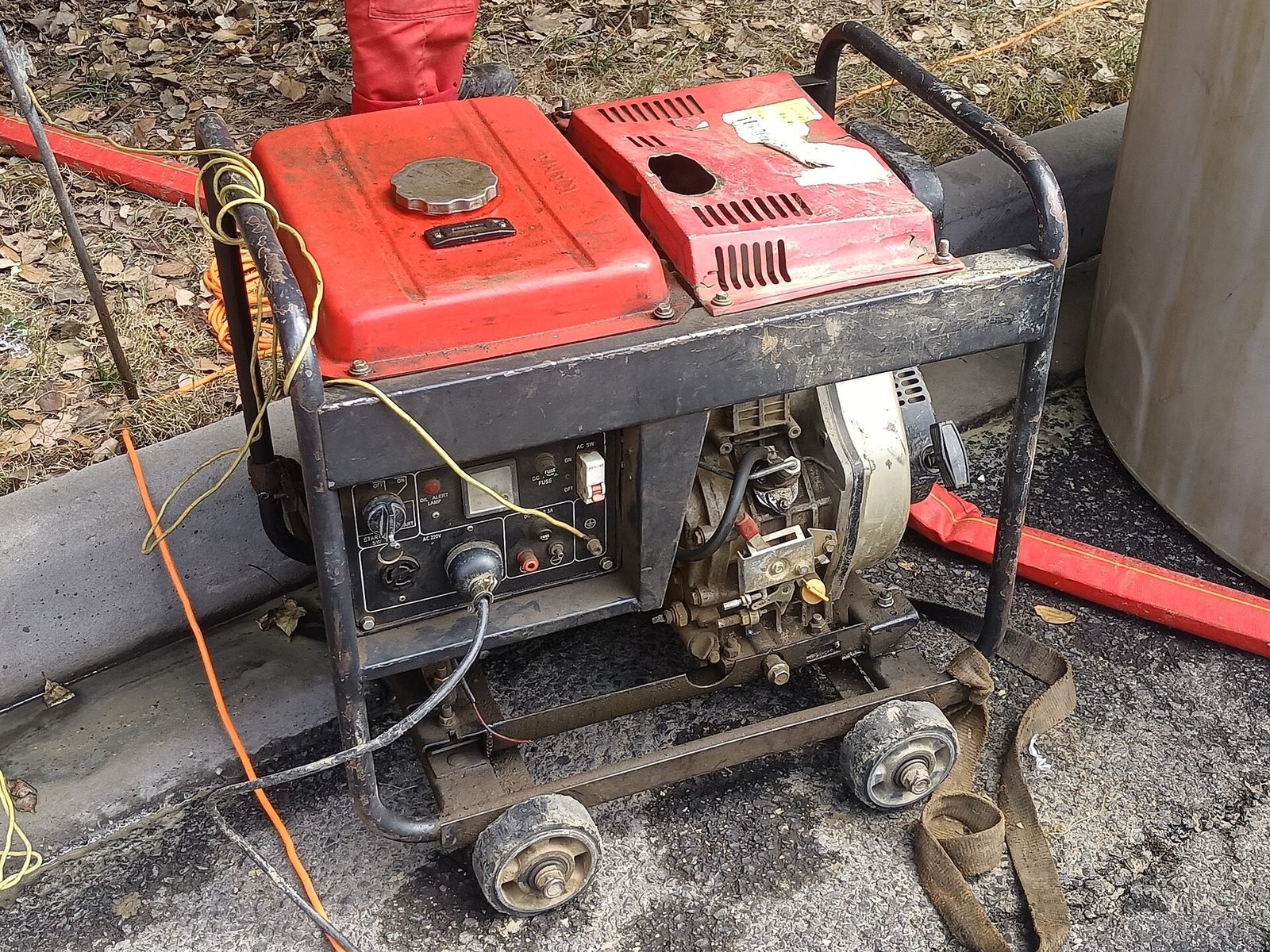
Generators are wonderful machines that are only dangerous when we get creative. According to CPSC, an average of nearly 100 people die in the U.S. each year from carbon monoxide poisoning caused by portable generators. CO is colorless and odorless, and it can knock you out before you notice you feel sick. These four rules cover most of the danger:
- Outside only, 20 feet away. Never run it in a house, garage, basement, crawlspace or shed, even with the door open. CPSC says to keep it at least 20 feet from the house with the exhaust pointed away from doors and windows, and not on a porch or in a carport.
- Cool down before refueling. Turn it off and let it cool before you add fuel. The Red Cross explains that gas spilled on hot engine parts can ignite. Be Ready Utah suggests waiting about 20 minutes.
- Never backfeed. Plugging a generator into a wall outlet to power the house is called backfeeding, and the Red Cross warns it can electrocute utility workers, your neighbors and your own family. To power house circuits, have an electrician install a transfer switch.
- Keep it dry. Don’t run it in rain or snow on wet ground. Follow your manual. CPSC notes some manufacturers allow a noncombustible generator tent, and some say to wait until the weather passes.
I covered the carbon monoxide side in more depth in my guide to safe heat during winter outages, including CO alarm basics and safer ways to stay warm when the power is out.
Why it matters to you
Winter is when generators earn their keep. According to weather.com, this week’s nor’easter brought the season’s first accumulating snow to parts of the interior Northeast, and the cold behind it could bring a first freeze as far south as the Carolinas, Georgia and Alabama this weekend. Heavy, wet snow on branches is exactly what pulls power lines down.
The Cummins recall is small, but it’s a good reminder that the machine you’re counting on in an emergency needs a little attention before the emergency. A generator that won’t start, runs out of oil, or sprays fuel is worse than no generator at all, because you planned around it. Fifteen minutes now is a lot cheaper than a spoiled freezer, a frozen pipe (here’s how to keep yours from bursting), or a trip to the ER.
If you don’t own a generator, you can still use this week as your nudge to check your CO alarms and walk through my no-drama winter outage prep guide.
What I’d grab
These are the boring, inexpensive things that make a generator safer and more dependable when the lights go out:
- First Alert CO606 plug-in carbon monoxide alarm with battery backup: plugs into an outlet and keeps watching on its 9-volt backup battery when the power is out, which is exactly when generators and CO show up.
- STA-BIL Storage Fuel Stabilizer (32 oz): add it to fresh gas before your generator sits for the winter so the fuel is still good when you finally need it.
As an Amazon Associate I earn from qualifying purchases.
The bottom line
If you own a Cummins Onan P5000iDF EFI with part number A075C500, stop using it and book the free repair. Everyone else: check your model for recalls, treat or burn off old fuel, test-run it outside, and make sure your CO alarms work. Generators are great, as long as they stay outside and keep their gasoline to themselves.
Have a generator question or a close call you want to share? Send it my way through the Contact Us page.
Want more quick prepping and home power tips? Catch my short videos on YouTube.
Sources
- U.S. CPSC: Cummins Recalls Portable Generators Due to Risk of Serious Injury from Fire and Burn Hazards (Nov. 12, 2026)
- Cummins: Safety Campaign #7308, P5000iDF EFI Portable Generator
- USA TODAY recall database: Cummins portable generator recall
- CPSC via PR Newswire: CPSC Posts Product Recalls and Product Safety Warnings (Nov. 12, 2026)
- U.S. CPSC: Winter Storm May Knock Out Power; CPSC Warns of Deadly Carbon Monoxide and Fire Risks
- American Red Cross: Generator Safety
- Be Ready Utah: Generator
- weather.com: Nor’easter brings first snow, freezes plus a rare tornado (Nov. 13, 2026)
- National Weather Service: Winter weather warnings and advisories, Eastern Region



More Stories
Winter’s First Punch Lands This Week. Here’s the Car Emergency Kit That Gets You Home
The First Big Freeze Is Coming This Week. Here’s How to Keep Your Pipes From Bursting
Stay Warm Without Getting Poisoned: Safe Heat During Winter Outages